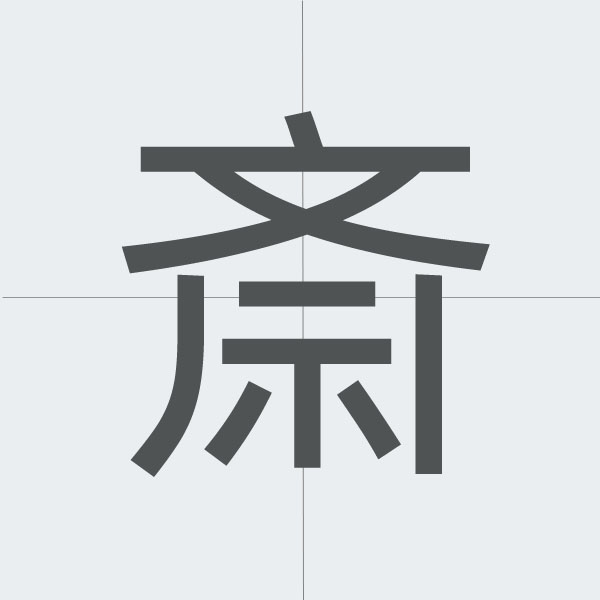
The Kanji: 斎 (Sai / Itsu / Tsu)
The kanji 斎 means "purification," "abstinence," or "study room." It combines 斉 (equal/align) with 示 (altar), originally depicting ritual preparation before worship. This character represents spiritual purity and dedicated spaces.
Common Words & Example Sentences
1. 書斎 (shosai) - Study
父は書斎で読書する。
"My father reads in his study."
2. 斎藤 (Saitō) - Common surname
斎藤さんは隣のクラスです。
"Mr. Saito is in the next class."
3. 潔斎 (kessai) - Ritual purification
神事の前に潔斎を行う。
"Perform ritual purification before the ceremony."
4. 斎場 (saijō) - Funeral hall
斎場で告別式が行われる。
"The funeral is held at the funeral hall."
In summary, 斎 describes purification rituals (潔斎), dedicated spaces (書斎, 斎場), and appears in common names (斎藤). It maintains connections to both spiritual purity and focused study in Japanese culture.