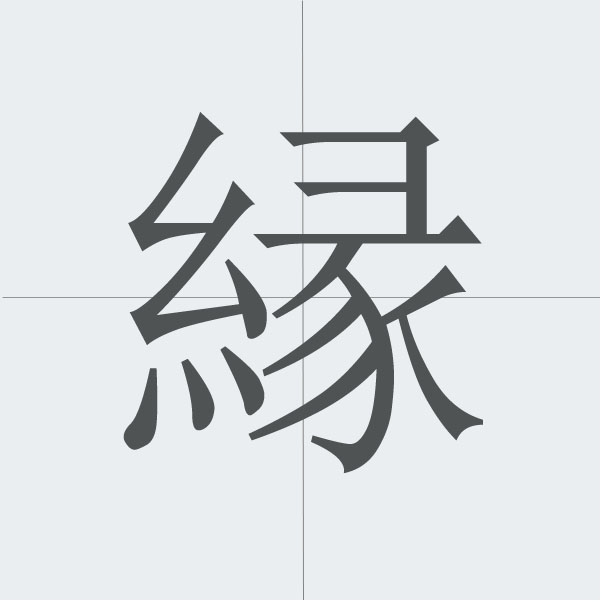
The Kanji: 縁 (En / Fuchi)
The kanji 縁 carries rich meanings of "edge," "fate," and "connection." It combines 糸 (thread) with 彖 (divination), beautifully symbolizing the threads of destiny that connect people and events. This character represents both physical borders and intangible bonds.
Common Words & Example Sentences
1. 縁 (en) - Fate/Destiny
私たちの出会いは縁だ。
"Our meeting is destiny."
2. 縁側 (engawa) - Veranda
縁側でお茶を飲む。
"Drink tea on the veranda."
3. 縁起 (engi) - Omen
黒猫は縁起が悪いと言われる。
"Black cats are said to be bad omens."
4. 縁談 (endan) - Marriage proposal
良い縁談が来た。
"A good marriage proposal has come."
In summary, 縁 uniquely connects physical edges (縁側) with spiritual connections (縁), cultural superstitions (縁起), and life-changing relationships (縁談), embodying the deep Japanese concept of interconnectedness.