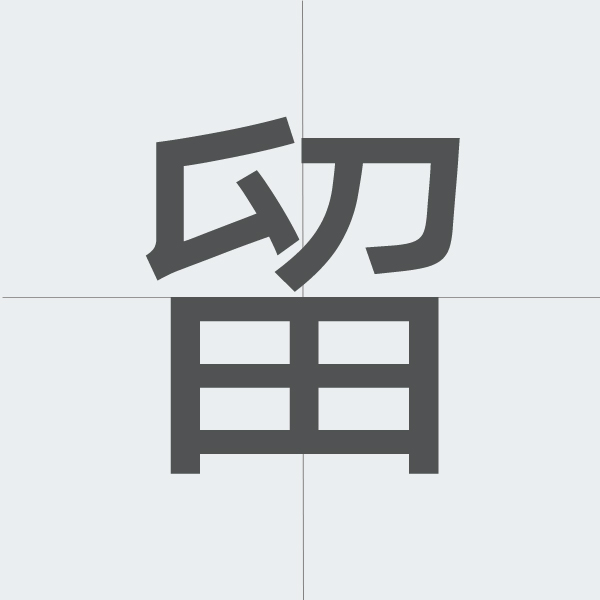
留 kanji stroke order 留 japanese kanji writing 留 kanji diagram-kanji lookup

りゅうがく
留学
Most common form: りゅうがく
noun, 'suru' verb
studying abroad (usu. at university level)
るす
留守
noun, 'suru' verb
1. absence; being away from home
2. house-sitting; house-sitter
しと
仕留
める
ichidan verb, transitive verb
to bring down (a bird); to kill
きょくど
局留
noun
general delivery; counter collection; poste restante
かきとめ
書留
Most common form: かきとめ
noun, 'suru' verb, 'no' adjective
1. registered mail  (see also: 書留郵便; abbreviation)
2. registration (e.g. of mail); writing down; putting on record; recording; making a note of
とど
まる
Most common form: 止まる
'ru' godan verb, intransitive verb
1. to remain; to abide; to stay (in the one place)  (often written with kana only)
2. to be limited to; to be confined to  (often written with kana only)

kanji stroke order.jpg

The Kanji: 留 (Ryū / Ru / To)

The kanji 留 means "to stay," "to detain," or "to retain." It combines 田 (field) with 卯 (east/sign of stopping), originally depicting staying in one's fields. This character represents remaining in place and preventing movement.


Common Words & Example Sentences

1. 留学 (ryūgaku) - Study abroad

  • アメリカに留学する。

  • "Study abroad in America."

2. 留守 (rusu) - Absence

  • 家を留守にする。

  • "Be away from home."

3. 保留 (horyū) - Reservation

  • 判断を保留する。

  • "Reserve judgment."

4. 留める (tomeru) - To fasten

  • ピンで髪を留める。

  • "Fasten hair with a pin."

In summary, 留 describes staying and fixing - from educational sojourns (留学) and temporary absences (留守) to deferred decisions (保留) and physical fastening (留める). It encompasses both temporary permanence and prevention of movement in Japanese.