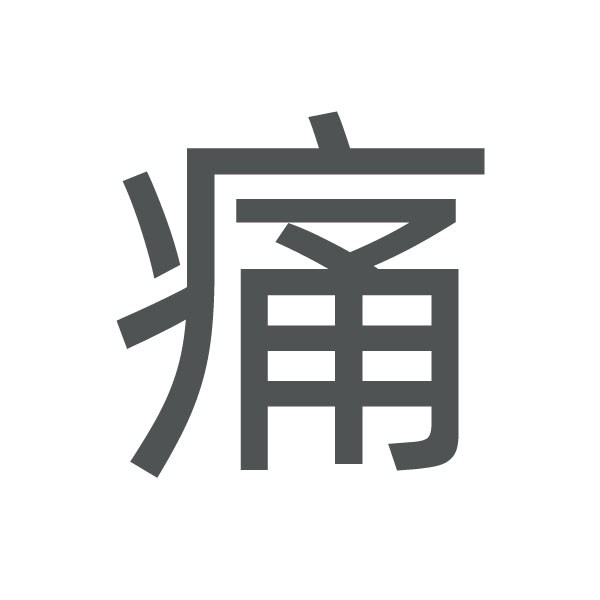
1. Kanji Breakdown: 痛
Meaning: Pain, ache; to hurt; intense, severe.
Reading:
Onyomi (Sino-Japanese reading): ツウ (tsuu)
Kunyomi (Native Japanese reading): いた(い) (ita(i)), いた(む) (ita(mu)), いた(める) (ita(meru))
The kanji is a phono-semantic compound (形声文字). It consists of two parts:
Top (疒): The "sickness" radical (やまいだれ), representing illness or physical discomfort.
Bottom (甬): A phonetic component that provides the sound ("tsuu").
The character's structure vividly depicts a "state of sickness or discomfort (疒)" that causes a sharp or severe sensation, which is the essence of pain.
2. Stroke Order and Writing (12 Strokes)
Correct stroke order is essential for balanced and legible kanji.
Stroke Order Diagram:
Start with the top radical "疒" (sickness radical):
Then, write the bottom part "甬":
Key Writing Tips:
Write from top to bottom, left to right.
The "疒" radical should be wide enough to cover the components below.
The bottom part "甬" should be centered. Pay attention to the correct stroke order for the top (マ) and the bottom (用).
The overall character should feel balanced.
3. Core Meanings & Example Sentences
Here are the primary meanings of "痛" with common vocabulary and practical example sentences.
A. Physical Pain (いたい)
痛い (いたい, itai)
Meaning: Painful, sore (adjective).
Example: 転んで膝がとても痛い。
English: I fell down and my knee is very painful.
頭痛 (ずつう, zutsū)
Meaning: Headache.
Example: ストレスで頭痛がする。
English: I have a headache from stress.
B. Emotional Pain / To Hurt (ツウ)
痛む (いたむ, itamu)
Meaning: To hurt, to feel pain (physical or emotional).
Example: 彼の言葉で心が痛んだ。
English: My heart hurt from his words.
痛感 (つうかん, tsūkan)
Meaning: To feel keenly, to realize acutely.
Example: チームワークの重要性を痛感した。
English: I keenly felt the importance of teamwork.
C. Intense / Severe (ツウ)
痛烈 (つうれつ, tsūretsu)
Meaning: Sharp, severe, scathing (e.g., criticism).
Example: 彼は政府に痛烈な批判をした。
English: He leveled scathing criticism at the government.
痛快 (つうかい, tsūkai)
Meaning: Thrilling, exhilarating (so intense it's satisfying).
Example: それはまさに痛快な勝利だった。
English: It was a truly thrilling victory.
Summary
Kanji: 痛
Core Meaning: Pain; to Hurt; Intense.
Keyword: Physical/Sensory Pain, Emotional Hurt.
Readings: On'yomi ツウ (tsuu), Kun'yomi いたい (itai)
Stroke Order: 12 strokes. Structure: 疒 (sickness) + 甬 (phonetic).
This character is fundamental for describing both physical sensations and emotional experiences, ranging from a simple ache to intense, profound feelings. Mastering "痛" is essential for effective communication in medical, emotional, and everyday contexts in Japanese.