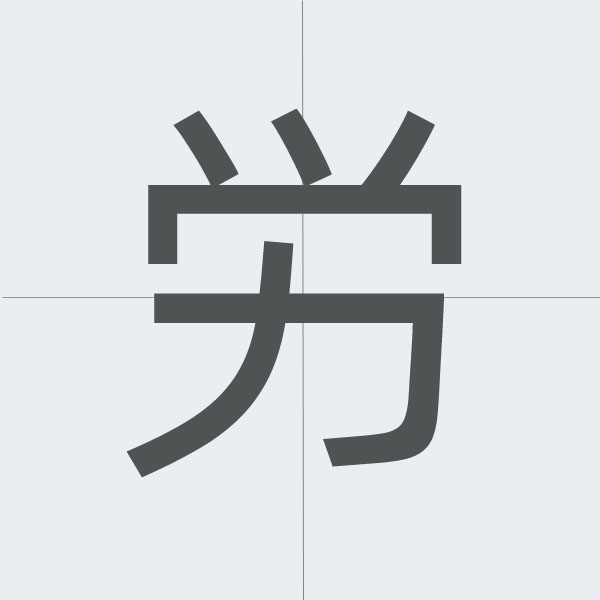
The Kanji: 労 (Rō / Itawa)
The kanji 労 means "labor," "toil," or "appreciation." It combines 力 (strength) with 冖 (cover) and 火 (fire), originally depicting strenuous work under the burning sun. This character represents physical work and the gratitude for it.
Common Words & Example Sentences
1. 労働 (rōdō) - Labor
労働時間を短縮する。
"Reduce working hours."
2. 苦労 (kurō) - Hardship
子育ての苦労がわかる。
"Understand the hardships of parenting."
3. 疲労 (hirō) - Fatigue
疲労が溜まっている。
"Fatigue has accumulated."
4. ご苦労様 (gokurōsama) - Thank you for your work
ご苦労様、今日も一日お疲れ様。
"Thank you for your hard work today."
In summary, 労 encompasses work (労働), its difficulties (苦労), physical effects (疲労), and social appreciation (ご苦労様). It reflects the cultural value placed on hard work and mutual respect in Japanese society.