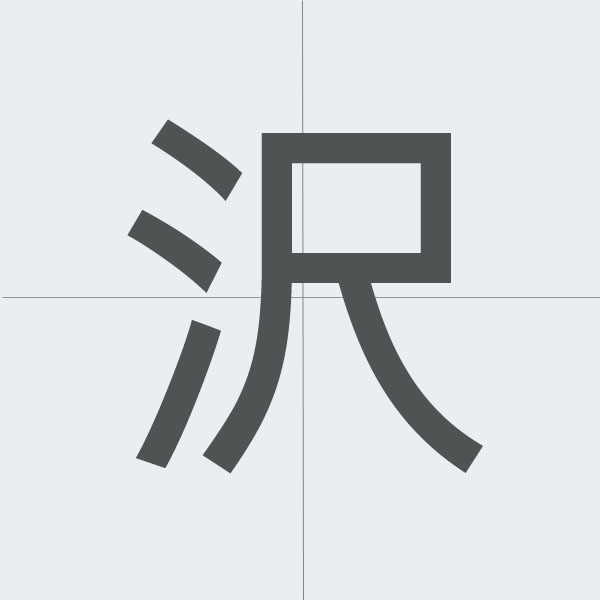
The Kanji: 沢 (Taku / Sawa)
The kanji 沢 (read as taku or sawa) primarily means "swamp," "marsh," or "wetlands." It is composed of the water radical (氵) on the left, indicating its connection to liquid, and the component 睪 on the right, which historically contributed to the sound and meaning related to "accumulation." This structure effectively depicts a place where water collects. By extension, it also carries a meaning of "abundance" or "plenty," much like a marsh teeming with life and resources.
Common Words & Example Sentences
1. 沢 (sawa)
Meaning: A mountain stream or marsh.
Example Sentence: 山の沢で冷たい水を飲んだ。
(Yama no sawa de tsumetai mizu o nonda.)
"I drank cold water from a mountain stream."
2. 沢山 (takusan)
Meaning: Many; a lot; plenty. This is an extremely common word.
Example Sentence: 彼は本を沢山持っている。
(Kare wa hon o takusan motte iru.)
"He has a lot of books."
3. 光沢 (kōtaku)
Meaning: Luster; gloss; shine (on a surface).
Example Sentence: この紙はとても光沢がある。
(Kono kami wa totemo kōtaku ga aru.)
"This paper has a high gloss."
4. 恩沢 (ontaku)
Meaning: Blessings; bounty (often from a superior or nature).
Example Sentence: 自然の恩沢に感謝する。
(Shizen no ontaku ni kansha suru.)
"To be grateful for the bounty of nature."
In summary, 沢 is a versatile kanji. Its core meaning relates to wetlands (沢), but its most common modern usage is to express abundance (沢山). It also appears in words describing richness, from visual shine (光沢) to metaphorical blessings (恩沢).