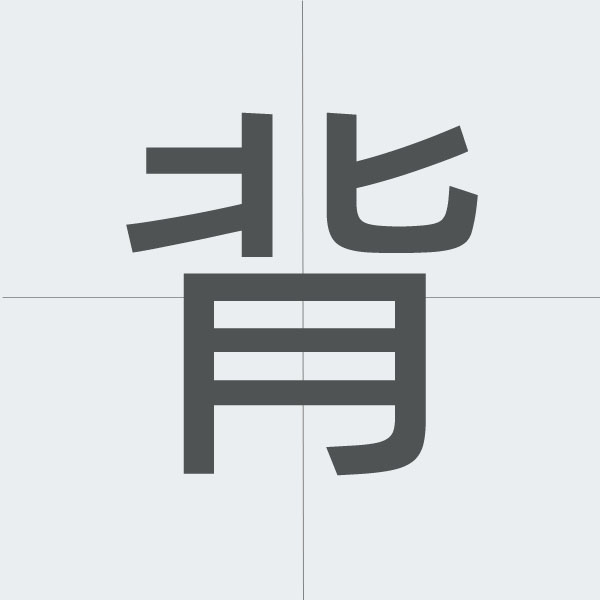
The Kanji: 背 (Se / Hai / Se)
The kanji 背 is a multi-reading character with core meanings related to the back of the body and the concept of height or stature. A third important meaning is "to turn one's back" or "to betray." Its structure combines the body radical (月) with 北 (north, originally depicting "back to back"), reinforcing its connection to the back.
Common Words & Example Sentences
1. 背 (se)
Meaning: Height; stature.
Example Sentence: 彼は背が高いです。
(Kare wa se ga takai desu.)
"He is tall." (Literally: "His height is high.")
2. 背中 (senaka)
Meaning: The back (of the body).
Example Sentence: 背中が痛いです。
(Senaka ga itai desu.)
"My back hurts."
3. 背く (somuku)
Meaning: To turn one's back on; to disobey; to betray.
Example Sentence: 命令に背くことはできません。
(Meirei ni somuku koto wa dekimasen.)
"I cannot disobey orders."
4. 背景 (haikei)
Meaning: Background; setting (e.g., in a photo or story).
Example Sentence: 写真の背景が綺麗ですね。
(Shashin no haikei ga kirei desu ne.)
"The background of the photo is beautiful, isn't it?"
In summary, 背 is a versatile kanji connecting physical attributes like height (背) and the back (背中) with more abstract actions like defying (背く) or the contextual background (背景) in a scene.