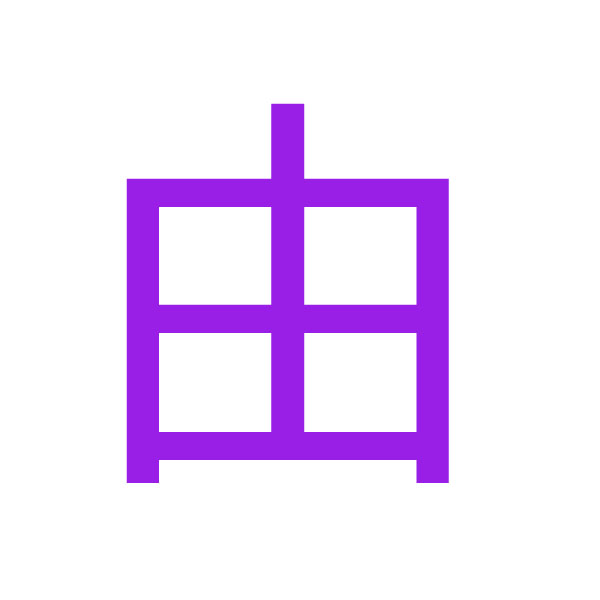
1. Kanji Breakdown: 由
Meaning: Reason, cause, origin. It signifies the source, basis, or motive for something. It can also mean "to be based on" or "from."
Reading:
Onyomi (Sino-Japanese reading): ユ (yu), ユウ (yuu)
Kunyomi (Native Japanese reading): よし (yoshi)
2. Stroke Order and Writing
Learning the correct stroke order is crucial for balanced and beautiful kanji. "由" is a simple but fundamental character with 5 strokes.
Here is the stroke order diagram and explanation:
Total Strokes: 5
First, the vertical stroke. (From top to bottom)
Next, the horizontal stroke. (From left to right, intersecting the top of the first stroke)
The short vertical stroke. (On the left side, from top to bottom)
The right-falling stroke. (A long diagonal from the center to the bottom-right)
Finally, the bottom horizontal stroke. (This stroke seals the bottom. It starts at the left, goes to the right, and often ends with a slight stop.)
Key Writing Tips:
The character should be slightly wider than it is tall.
The vertical stroke (1) should be straight and centered.
Ensure the bottom is closed properly by the final horizontal stroke (5). Do not leave it open like the katakana ロ.
3. Vocabulary and Example Sentences
Here are some common words using "由" and how to use them in sentences.
Vocabulary
理由 (りゆう, riyuu)
Meaning: Reason, cause.
Example: 遅れた理由を説明してください。
Romaji: Okureta riyuu o setsumei shite kudasai.
English: Please explain the reason for your lateness.
自由 (じゆう, jiyuu)
Meaning: Freedom, liberty.
Example: 表現の自由は大切だ。
Romaji: Hyōgen no jiyuu wa taisetsu da.
English: Freedom of expression is important.
経由 (けいゆ, keiyu)
Meaning: Via, by way of, through.
Example: シンガポール経由でロンドンへ行く。
Romaji: Shingapōru keiyu de Rondon e iku.
English: I'm going to London via Singapore.
由来 (ゆらい, yurai)
Meaning: Origin, history, derivation (where something comes from).
Example: この祭りの由来を調べている。
Romaji: Kono matsuri no yurai o shirabete iru.
English: I am researching the origin of this festival.
不自由 (ふじゆう, fujiyuu)
Meaning: Inconvenience, disability, hardship (the state of not being free).
Example: この道具がなければ不自由だ。
Romaji: Kono dōgu ga nakereba fujiyuu da.
English: It would be very inconvenient without this tool.
Summary
Kanji: 由
Core Meaning: Reason, Cause, Origin.
Readings: On'yomi ユ (yu) / ユウ (yuu), Kun'yomi よし (yoshi)
Stroke Order: 5 strokes. Focus on the correct order to create a well-proportioned character, ensuring the bottom is properly closed.
By mastering the simple stroke order and learning these common compound words, you will be able to correctly write and use this essential kanji. It's a fundamental building block for many other words, so it's a great one to learn well!