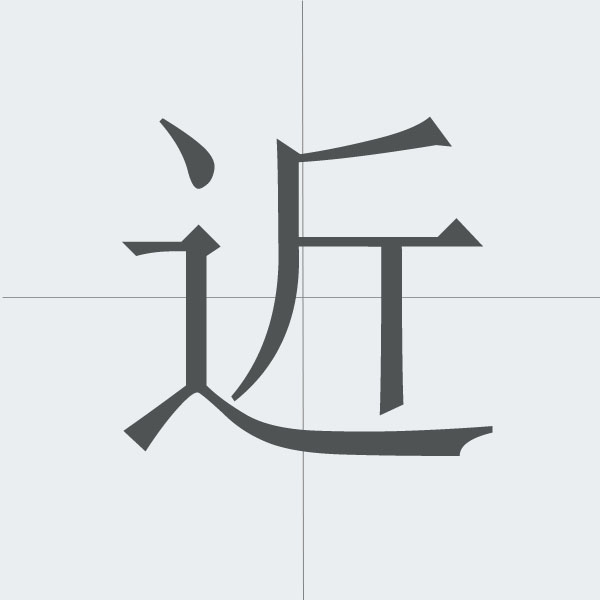
The Kanji: 近 (Kin / Chika)
The kanji 近 means "near," "close," or "approaching." It combines 辶 (movement) with 斤 (axe), originally suggesting the act of approaching within axe-range. This character describes spatial proximity and temporal imminence.
Common Words & Example Sentences
1. 近い (chikai) - Near/Close
駅はここから近い。
"The station is close from here."
2. 最近 (saikin) - Recently
最近引っ越しました。
"I moved recently."
3. 近所 (kinjo) - Neighborhood
近所のスーパーへ行く。
"Go to the neighborhood supermarket."
4. 近づく (chikazuku) - To approach
試験が近づく。
"The exam is approaching."
In summary, 近 describes physical proximity (近い), temporal recency (最近), local areas (近所), and the process of nearing (近づく). It's essential for expressing spatial and temporal relationships in Japanese.