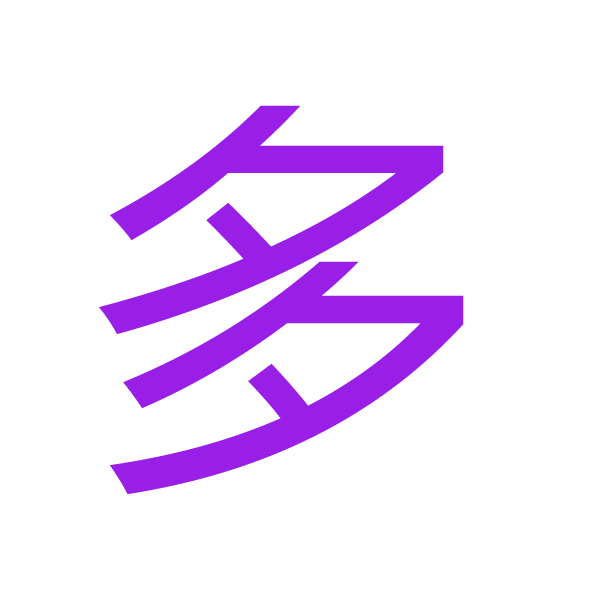
The Kanji: 多 (Ō.i/Ta) - The "Many" Kanji
1. Meaning and Usage
Core Meanings: Many; much; numerous; frequent
Readings:
Kun'yomi (Japanese reading): おお.い (ō.i)
On'yomi (Chinese reading): タ (ta)
Common Words and Compounds:
多い (おおい / ōi) - Many; numerous
多少 (たしょう / tashō) - More or less; somewhat
多分 (たぶん / tabun) - Probably; perhaps
多数 (たすう / tasū) - Majority; large number
多忙 (たぼう / tabō) - Very busy
2. Writing and Stroke Order: Stacked Evening Meals
The correct kanji writing for "多" follows a clear top-bottom structure with identical components.
Stroke Order:
Top Component (夕 - evening):
Stroke 1: Left-falling stroke
Stroke 2: Right-falling stroke crossing the first stroke
Bottom Component (夕 - evening):
3. Stroke 3: Left-falling stroke (slightly longer)
4. Stroke 4: Right-falling stroke crossing the third stroke
Significance of Correct Kanji Writing:
Symmetry: Both "夕" components should be similar but the bottom one is slightly larger
Balance: The character should appear stable despite its repeating elements
Proportions: The bottom component should extend slightly wider than the top
3. Historical Origin and Evolution
The history of "多" reveals an interesting connection between daily life and quantitative concepts.
Oracle Bone Script (甲骨文字):
The earliest form showed two pieces of meat stacked together, representing:
Multiple portions of food
Abundance and surplus
Repeated items indicating quantity
Bronze Script (金文):
The form became more stylized, with the meat portions evolving into the "夕" shape we recognize today.
Seal Script (篆書):
The character standardized into two stacked "夕" components, though the original meat meaning was fading.
Modern Form (楷書):
The modern "多" maintains the double "夕" structure with clean, standardized strokes.
Conceptual Evolution:
The character's meaning developed through logical association:
Stacked Meat → Multiple Items
Food Abundance → General Quantity
Physical Quantity → Abstract Frequency
Original Meaning:
The character originally represented "multiple portions of meat" or "abundant food supply," symbolizing:
Wealth and prosperity (owning much meat)
Feasting and celebration
Physical abundance and surplus
Cultural Significance:
In Japanese culture, "多" carries important quantitative meanings:
Social Harmony: 多数決 (majority rule) in decision-making
Economic Value: Associated with wealth and abundance
Practical Usage: Essential for counting and quantification
Modern Context: Used in technology terms like 多媒体 (multimedia)
The character embodies the transition from physical abundance to abstract numerical concepts.
Summary
The kanji "多" represents a fascinating evolution from physical sustenance to abstract quantity. Beginning as a pictogram of stacked meat portions - the most tangible evidence of wealth and abundance in ancient times - it evolved to encompass all forms of multiplicity and frequency. Mastering its stroke order and symmetrical structure teaches important principles of Japanese kanji writing. When you learn how to write kanji like "多," you're engaging with a character that connects ancient economic wealth (measured in food surplus) with modern mathematical concepts. This character serves as a delicious reminder that our understanding of "many" is deeply rooted in the most fundamental human experience of food abundance - from the stacked meat portions that signified prosperity in ancient communities to the numerical majorities and frequent occurrences we quantify today. "多" continues to represent both concrete numbers and abstract frequency, beautifully preserving its origins in physical abundance while serving modern quantitative needs.