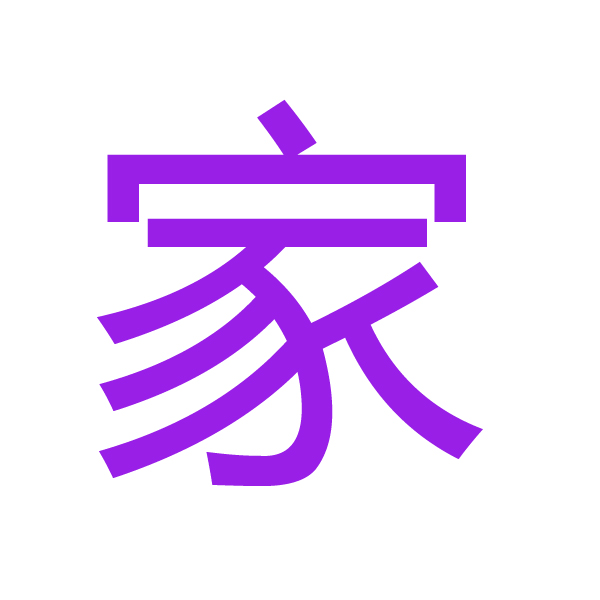
The Kanji: 家 (Ie/Ka/Ke) - The "House" Kanji
1. Meaning and Usage
Core Meanings: House; home; family; household; expert
Readings:
Kun'yomi (Japanese reading): いえ (ie), や (ya)
On'yomi (Chinese reading): カ (ka), ケ (ke)
Common Words and Compounds:
家 (いえ / ie) - House; home
家族 (かぞく / kazoku) - Family
作家 (さっか / sakka) - Writer; author
政治家 (せいじか / seijika) - Politician
家具 (かぐ / kagu) - Furniture
2. Writing and Stroke Order: The Roof and the Pig
The correct kanji writing for "家" follows a clear top-bottom structure with distinctive components.
Stroke Order:
Top Component (宀 - roof):
Stroke 1: Right dot
Stroke 2: Left dot
Stroke 3: Horizontal折 stroke forming the roof
Bottom Component (豕 - pig/boar):
4. Stroke 4: Right dot
5. Stroke 5: Left-falling stroke
6. Stroke 6: Horizontal折 stroke
7. Stroke 7: Left-falling stroke
8. Stroke 8: Right-falling stroke with hook
9. Stroke 9: Left-falling stroke
10. Stroke 10: Right-falling stroke
Significance of Correct Kanji Writing:
Proportions: The roof should be wide enough to cover the "pig" component
Balance: The character should appear stable and grounded
Stroke Flow: The "pig" component requires careful attention to stroke direction and connections
3. Historical Origin and Evolution
The history of "家" reveals a fascinating glimpse into ancient domestic life and values.
Oracle Bone Script (甲骨文字):
The earliest form clearly showed:
宀 (roof) - representing a building or shelter
豕 (pig/boar) - depicting a domesticated pig
Bronze Script (金文):
The form became more stylized but maintained the clear roof and pig elements.
Seal Script (篆書):
The character evolved into a more standardized form while preserving the essential components.
Original Meaning:
The character originally represented "a household that keeps pigs" - indicating:
A settled, agricultural family
Economic stability (livestock as wealth)
Permanent residence rather than nomadic lifestyle
Modern Form (楷書):
The modern "家" maintains the basic structure with standardized strokes.
Conceptual Evolution:
From its agricultural beginnings, the meaning expanded significantly:
Physical Structure → Social Unit (house → family)
Family → Lineage/School (artistic or philosophical traditions)
Social Group → Expert/Specialist (person belonging to a particular field)
Cultural Significance:
In Japanese culture, "家" carries profound social and philosophical meanings:
Family System: The traditional 家制度 (ie seido) family system
Artistic Traditions: 家元 (iemoto) system in traditional arts
Professional Identity: Used as a suffix for experts (音楽家 - musician)
Social Status: Historically indicated one's family background and social position
The character embodies the deep connection between domestic life, economic stability, and social identity in East Asian culture.
Summary
The kanji "家" represents a beautiful synthesis of practical economics and social structure. Beginning as a simple depiction of a roof sheltering livestock - the fundamental unit of agricultural wealth - it evolved to encompass all aspects of home, family, and professional identity. Mastering its stroke order and component structure teaches important principles of Japanese kanji writing. When you learn how to write kanji like "家," you're engaging with a character that connects ancient agricultural practices with modern social concepts. This character serves as a powerful reminder that our understanding of "home" and "family" is deeply rooted in historical economic realities - from the pig-rearing households of ancient China to the complex family systems and professional identities of contemporary Japan. The humble beginnings of this character continue to shape how we think about domestic space, family bonds, and professional expertise thousands of years later.