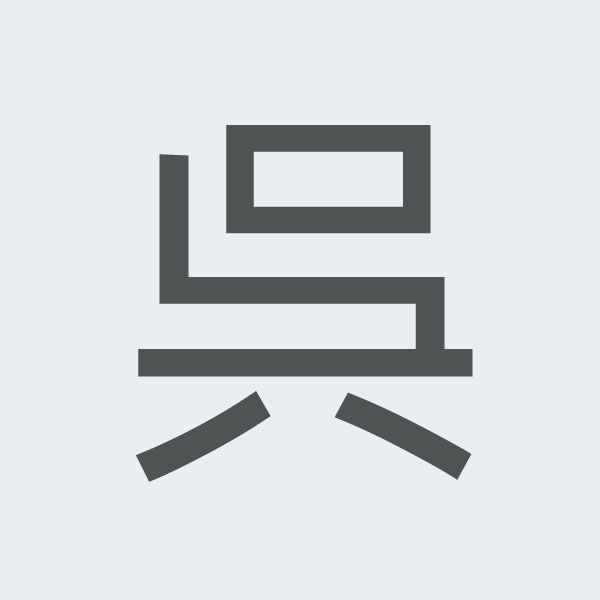
The Kanji: 呉 (Go / Kure)
The kanji 呉 (read as Go or Kure) primarily means "to give," "to offer," or "to do something for someone." Its origin is pictographic, derived from an ancient illustration of a person tilting their head back to open their mouth wide. This evolved into the idea of "giving" from one's mouth, i.e., giving a warning or, more generally, giving something to another.
Historically, it is also the name of the ancient Chinese Wu kingdom. In the Japanese context, 呉 (Kure) is famously used in the word 呉服 (Gofuku), which means "textiles" or "kimono fabric," a term originating from the weaving techniques introduced from the Wu kingdom.
Common Words & Example Sentences
1. 呉れる (kureru)
Meaning: A verb meaning "to give (me)" or "to do for me." It implies that the action is done for the benefit of the speaker or someone in the speaker's in-group.
Example Sentence: 友達が私に本をくれた。
(Tomodachi ga watashi ni hon o kureta.)
"My friend gave me a book."
2. 呉服 (gofuku)
Meaning: Kimono fabric or cloth for Japanese clothing.
Example Sentence: 母は呉服屋で帯を買いました。
(Haha wa gofuku-ya obi o kaimashita.)
"My mother bought an obi sash at the kimono fabric store."
3. 呉 (kure)
Meaning: Used as a place name in Japan, most notably for the city of Kure in Hiroshima Prefecture, known for its history of shipbuilding.
Example Sentence: 呉は広島県の港町です。
(Kure wa Hiroshima-ken no minato-machi desu.)
"Kure is a port city in Hiroshima Prefecture."
In summary, 呉 is a versatile character with core meanings of "giving" and a historical connection to the ancient Wu region, which is still seen in modern Japanese vocabulary and place names.