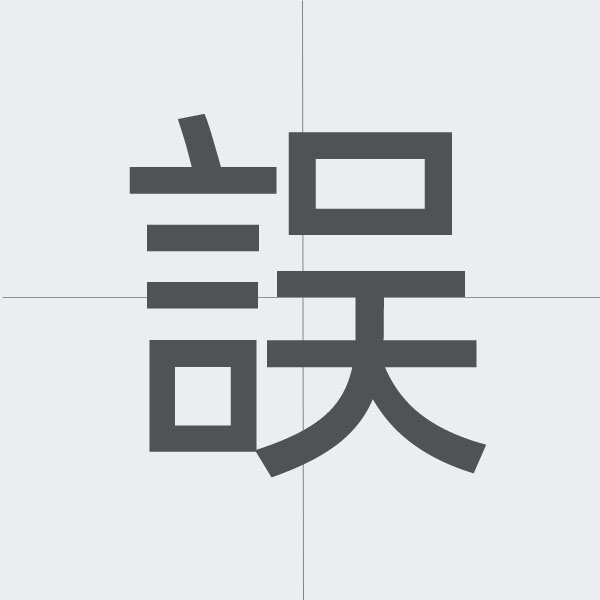
The Kanji: 誤 (Go / Ayama)
The kanji 誤 means "mistake," "error," or "to misunderstand." It combines 言 (words/speech) with 呉 (ancient tribe), originally depicting verbal misunderstandings between different groups. This character represents various types of errors and inaccuracies.
Common Words & Example Sentences
1. 誤り (ayamari) - Mistake
文章の誤りを直す。
"Correct errors in the text."
2. 誤解 (gokai) - Misunderstanding
彼の言葉を誤解した。
"I misunderstood his words."
3. 錯誤 (sakugo) - Error
認識錯誤を起こす。
"Make a cognitive error."
4. 誤算 (gosan) - Miscalculation
時間の誤算で遅れた。
"I was late due to miscalculating the time."
In summary, 誤 describes various inaccuracies - from simple mistakes (誤り) and misunderstandings (誤解) to cognitive errors (錯誤) and calculation faults (誤算). It's essential for discussing errors in Japanese communication and reasoning.