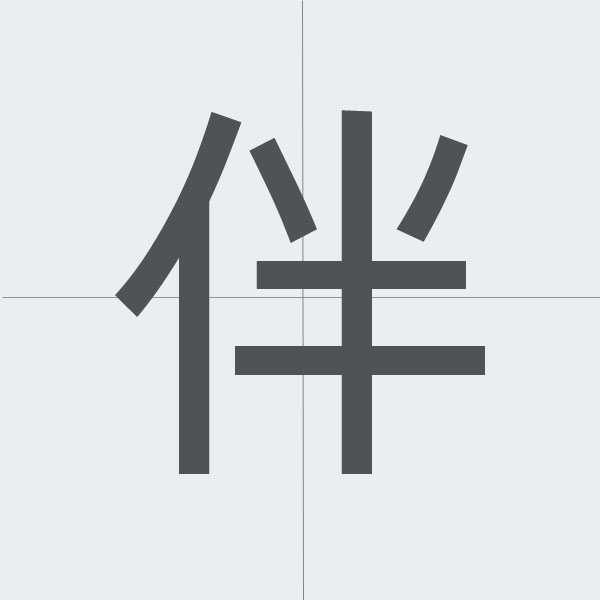
The Kanji: 伴 (Han / Tomona)
The kanji 伴 (read as han or tomona) carries the core meaning of "to accompany," "to go with," or "to involve." It is composed of the radical 亻 (person) and 半 (half), suggesting the idea of a person being joined by another as a "half" or partner, thus creating a sense of companionship and joint action. This character often implies that one thing naturally follows or is connected to another.
Common Words & Example Sentences
1. 伴う (tomonau)
Meaning: To accompany; to go along with; to involve (often used for consequences or necessary conditions).
Example Sentence: この手術にはリスクが伴います。
(Kono shujutsu ni wa risuku ga tomonaimasu.)
"This surgery involves risks."
2. 同伴 (dōhan)
Meaning: Accompanying someone; being together.
Example Sentence: 子供の同伴はご遠慮ください。
(Kodomo no dōhan wa go-enryo kudasai.)
"Please refrain from bringing children."
3. 伴侶 (hanryo)
Meaning: Partner; companion; spouse (a formal term).
Example Sentence: 人生の伴侶を見つけたい。
(Jinsei no hanryo o mitsuketai.)
"I want to find a life partner."
In summary, 伴 is a kanji that describes accompaniment and association. It ranges from physical accompaniment (同伴) to logical consequences (伴う), and even to deep, personal partnerships (伴侶). It effectively captures the idea of things or people being linked together.